

Mechanisms of Action for KEYTRUDA® (pembrolizumab), KEYTRUDA QLEX™ (pembrolizumab and berahyaluronidase alfa-pmph), and WELIREG® (belzutifan)

KEYTRUDA, KEYTRUDA QLEX, and WELIREG target 2 distinct pathways
MECHANISM OF ACTION FOR KEYTRUDA
Pembrolizumab: PD-1 receptor blockade
Pembrolizumab binds to the PD-1 receptor, blocking both immune-suppressing ligands, PD-L1 and PD-L2, from interacting with PD-1 to help restore T-cell response and immune response.
Restoring active T-cell response could affect both normal healthy cells and tumor cells.
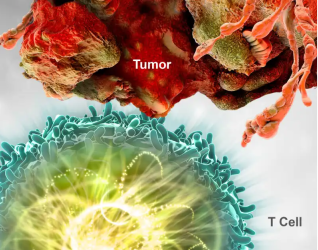
Normal immune response
When functioning properly, T cells are activated and can attack tumor cells.
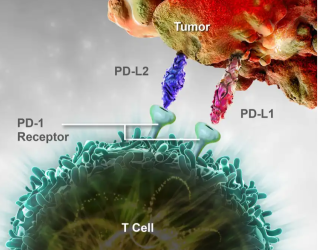
Tumor evasion and T-cell deactivation
Some tumors can evade the immune system through the PD-1 pathway. The PD‑L1 and PD‑L2 ligands on tumors can bind with PD-1 receptors on T cells to inactivate the T cells.
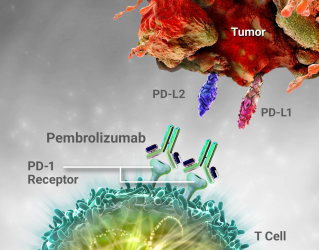
T-cell reactivation with pembrolizumab
Pembrolizumab binds to the PD-1 receptor and blocks its interaction with PD‑L1 and PD‑L2, which helps restore the immune response. While having an effect on the tumor, this could also affect normal healthy cells.
MOA = mechanism of action; PD-1 = programmed death receptor-1; PD-L1 = programmed death-ligand 1; PD-L2 = programmed death-ligand 2.
MECHANISM OF ACTION FOR KEYTRUDA QLEX
Berahyaluronidase alfa mechanism of action in KEYTRUDA QLEX
- Berahyaluronidase alfa, an endoglycosidase, is a variant of human hyaluronidase PH20 that temporarily and locally breaks down hyaluronan. Hyaluronan is a polysaccharide found in the extracellular matrix of the subcutaneous tissue. Unlike the stable structural components of the interstitial matrix, hyaluronan has a half-life of approximately 0.5 days.
- Hyaluronidase increases permeability of the subcutaneous tissue by depolymerizing hyaluronan. In the doses administered, the effects of berahyaluronidase alfa are reversible and permeability of the subcutaneous tissue is restored within 24 to 48 hours.
- Berahyaluronidase alfa facilitates delivery of the increased volume of pembrolizumab that is coadministered subcutaneously.
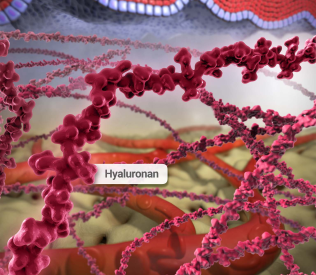
Hyaluronan in the subcutaneous space
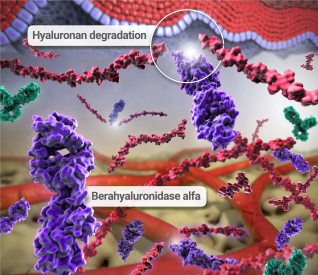
Degradation of hyaluranon by berahyaluronidase alfa
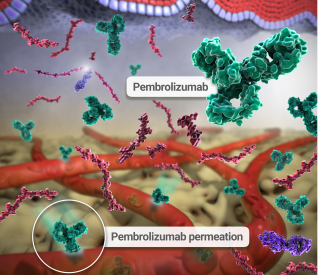
Increased drug permeation
MECHANISM OF ACTION FOR WELIREG
WELIREG: HIF-2α inhibitor
WELIREG works by targeting HIF-2α, a key driver of tumor growth.
HIF-2α is a transcription factor and one of the key drivers of tumor growth in ccRCC. Up to 92% of tumors from patients with any ccRCC are characterized by a somatic VHL gene mutation.1–4
WELIREG is a selective HIF-2α inhibitor, which works in the nucleus and may reduce the transcription of certain target genes that contribute to ccRCC

ccRCC = clear cell renal cell carcinoma; HIF-1β = hypoxia-inducible factor 1 beta; HIF-2⍺ = hypoxia-inducible factor 2 alpha; VHL = von Hippel-Lindau.
References: 1. Correa AF, Rini BI, Linehan WM, Schmidt LS, Lane BR, Uzzo RG. Cancer of the kidney. In: DeVita VT Jr, Lawrence TS, Rosenberg SA, eds. Cancer: Principles and Practice of Oncology. 12th ed. Wolters Kluwer; 2022:729–755. 2. Choi WSW, Boland J, Lin J. Hypoxia-inducible factor-2α as a novel target in renal cell carcinoma. J Kidney Cancer VHL. 2021;8(2):1–7. 3. Kaelin WG Jr. The VHL tumor suppressor gene: insights into oxygen sensing and cancer. Trans Am Clin Climatol Assoc. 2017;128:298–307. 4. Kaelin WG Jr. HIF2 inhibitor joins the kidney cancer armamentarium. J Clin Oncol. 2018;36(9):908–910.
You might be interested in: