

Dosing and Administration for KEYTRUDA® (pembrolizumab) or KEYTRUDA QLEX™ (pembrolizumab and berahyaluronidase alfa-pmph) and WELIREG® (belzutifan) for Certain Adults With Clear Cell RCC at Increased Risk of Recurrence in the Adjuvant Setting

DOSING FOR WELIREG
WELIREG: Convenient, once-daily, oral dosing for certain adults with ccRCC in the adjuvant setting
The recommended dose of WELIREG, when taken in combination with KEYTRUDA or KEYTRUDA QLEX, for the adjuvant treatment of ccRCC is 120 mg (three 40-mg tablets) orally once daily until disease recurrence or unacceptable toxicity, or up to 54 weeks

WELIREG should be taken at the same time each day and may be taken with or without food

Advise patients to swallow tablets whole.
Do not chew, crush, or split WELIREG prior to swallowing.

If a dose of WELIREG is missed, it can be taken as soon as possible on the same day.
Resume the regular daily dose schedule for WELIREG the next day. Do not take extra tablets to make up for the missed dose.

If vomiting occurs any time after taking WELIREG, do not retake the dose.
Take the next dose on the next day.
DOSE MODIFICATIONS FOR WELIREG
Adverse reactions associated with WELIREG may be managed with appropriate dose modifications
Recommended dosage modifications for adverse reactions with WELIREG in adjuvant ccRCC

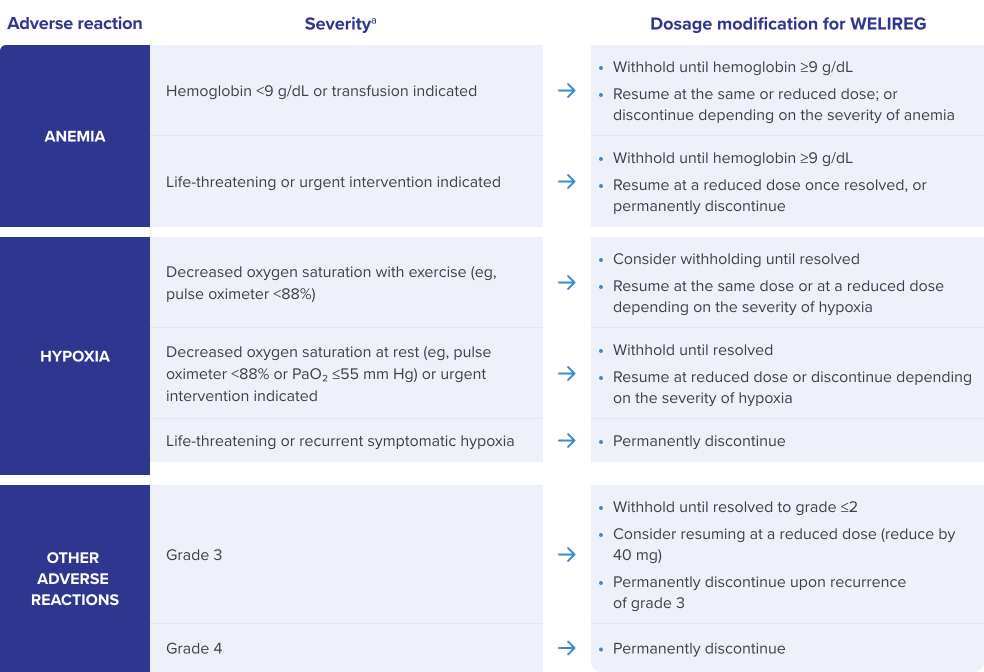
Graded per NCI CTCAE v5.0.
NCI CTCAE = National Cancer Institute Common Terminology Criteria for Adverse Events.
See Warnings and Precautions and Adverse Reactions sections of the WELIREG Prescribing Information for additional information. Also see the dose modifications tables for KEYTRUDA and KEYTRUDA QLEX for information specific to each of these agents.
Anemia, hypoxia, and other adverse reactions may be managed with dose modifications (if appropriate).
Dose modification for WELIREG (if appropriate)

DOSING FOR KEYTRUDA OR KEYTRUDA QLEX
Recommended dosage and administration of KEYTRUDA or KEYTRUDA QLEX when taken in combination with WELIREG
For each product, see full Prescribing Information for preparation and administration instructions and dosage modifications for adverse reactions.

KEYTRUDA QLEX has different recommended dosage and administration instructions than KEYTRUDA. KEYTRUDA QLEX is administered as a subcutaneous injection into the thigh or abdomen, avoiding the 5-cm area around the navel. KEYTRUDA QLEX must be administered by a health care provider. Inject into healthy skin and never into areas where the skin is red, bruised, tender, or hard. Ensure the injection site is at least 2.5 cm from the previous injection site. During treatment with KEYTRUDA QLEX, do not administer other medications for subcutaneous use at the same site as KEYTRUDA QLEX. Do not administer KEYTRUDA QLEX intravenously.
Administered after dilution as an intravenous infusion over 30 minutes.
mg of pembrolizumab/units of berahyaluronidase alfa.
Does not account for all aspects of treatment. Actual clinic time may vary.
Q3W = every 3 weeks; Q6W = every 6 weeks.
Dose modifications for KEYTRUDA
Dose modifications for KEYTRUDA
Monitor patients regularly and encourage them to immediately report any changes in their health.
No dose reduction for KEYTRUDA is recommended. In general, withhold KEYTRUDA for severe (grade 3) immune-mediated adverse reactions. Permanently discontinue KEYTRUDA for:
- Life-threatening (grade 4) immune-mediated adverse reactions
- Recurrent severe (grade 3) immune-mediated reactions that require systemic immunosuppressive treatment
- An inability to reduce corticosteroid dose to 10 mg or less of prednisone or equivalent per day within 12 weeks of initiating steroids
Dosage modifications for KEYTRUDA for adverse reactions that require management different from these general guidelines are summarized below.
Recommended dosage modifications for adverse reactions

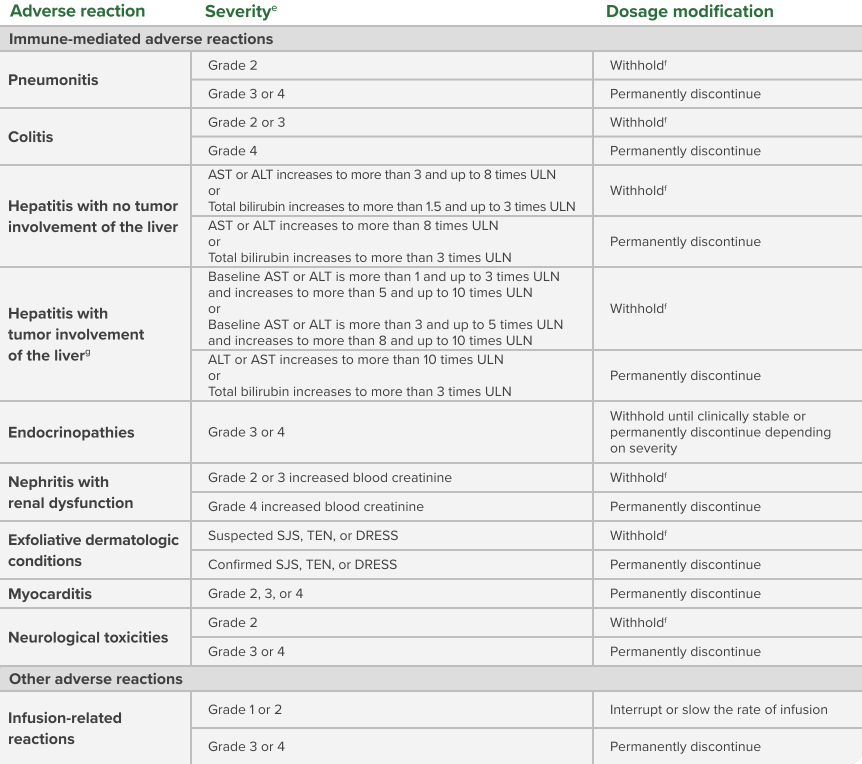
Based on NCI CTCAE v4.0.
Resume in patients with complete or partial resolution (grades 0 to 1) after corticosteroid taper. Permanently discontinue if no complete or partial resolution within 12 weeks of initiating steroids or inability to reduce prednisone to 10 mg per day or less (or equivalent) within 12 weeks of initiating steroids.
If AST and ALT are less than or equal to ULN at baseline, withhold or permanently discontinue KEYTRUDA QLEX based on recommendations for hepatitis with no liver involvement.
ALT = alanine aminotransferase; AST = aspartate aminotransferase; DRESS = drug reaction with eosinophilia and systemic symptoms; SJS = Stevens-Johnson syndrome; TEN = toxic epidermal necrolysis; ULN = upper limit of normal.
Dose modifications for KEYTRUDA QLEX
Dose modifications for KEYTRUDA QLEX
Monitor patients regularly and encourage them to immediately report any changes in their health.
No dose reduction for KEYTRUDA QLEX is recommended. In general, withhold KEYTRUDA QLEX for severe (grade 3) immune-mediated adverse reactions. Permanently discontinue KEYTRUDA QLEX for:
- Life-threatening (grade 4) immune-mediated adverse reactions
- Recurrent severe (grade 3) immune-mediated reactions that require systemic immunosuppressive treatment
- An inability to reduce corticosteroid dose to 10 mg or less of prednisone or equivalent per day within 12 weeks of initiating steroids
Dosage modifications for KEYTRUDA QLEX for adverse reactions that require management different from these general guidelines are summarized below.
Recommended dosage modifications for adverse reactions

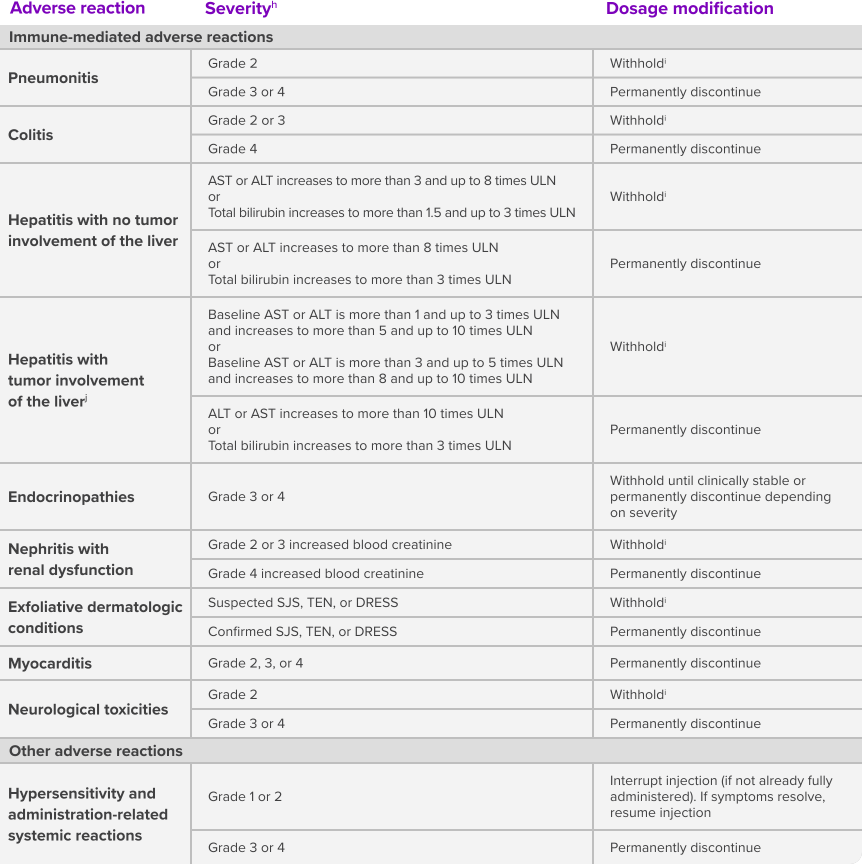
Based on NCI CTCAE v4.0.
Resume in patients with complete or partial resolution (grades 0 to 1) after corticosteroid taper. Permanently discontinue if no complete or partial resolution within 12 weeks of initiating steroids or inability to reduce prednisone to 10 mg per day or less (or equivalent) within 12 weeks of initiating steroids.
If AST and ALT are less than or equal to ULN at baseline, withhold or permanently discontinue KEYTRUDA QLEX based on recommendations for hepatitis with no liver involvement.
Helpful links and resources are available